At the intersection of youth development, food justice, and community resilience sits Highland Youth Garden. More than a place to grow fresh produce, the garden is a living classroom, a neighborhood gathering space, and a powerful response to food access inequities in Central Ohio. We sat down with the team at Highland Youth Garden to learn how their work nurtures not only plants, but also young leaders, strong partnerships, and a deeper connection to the land and community they serve.
1. Every organization has its unique identity. What sets your organization or program apart from others working in a similar space?
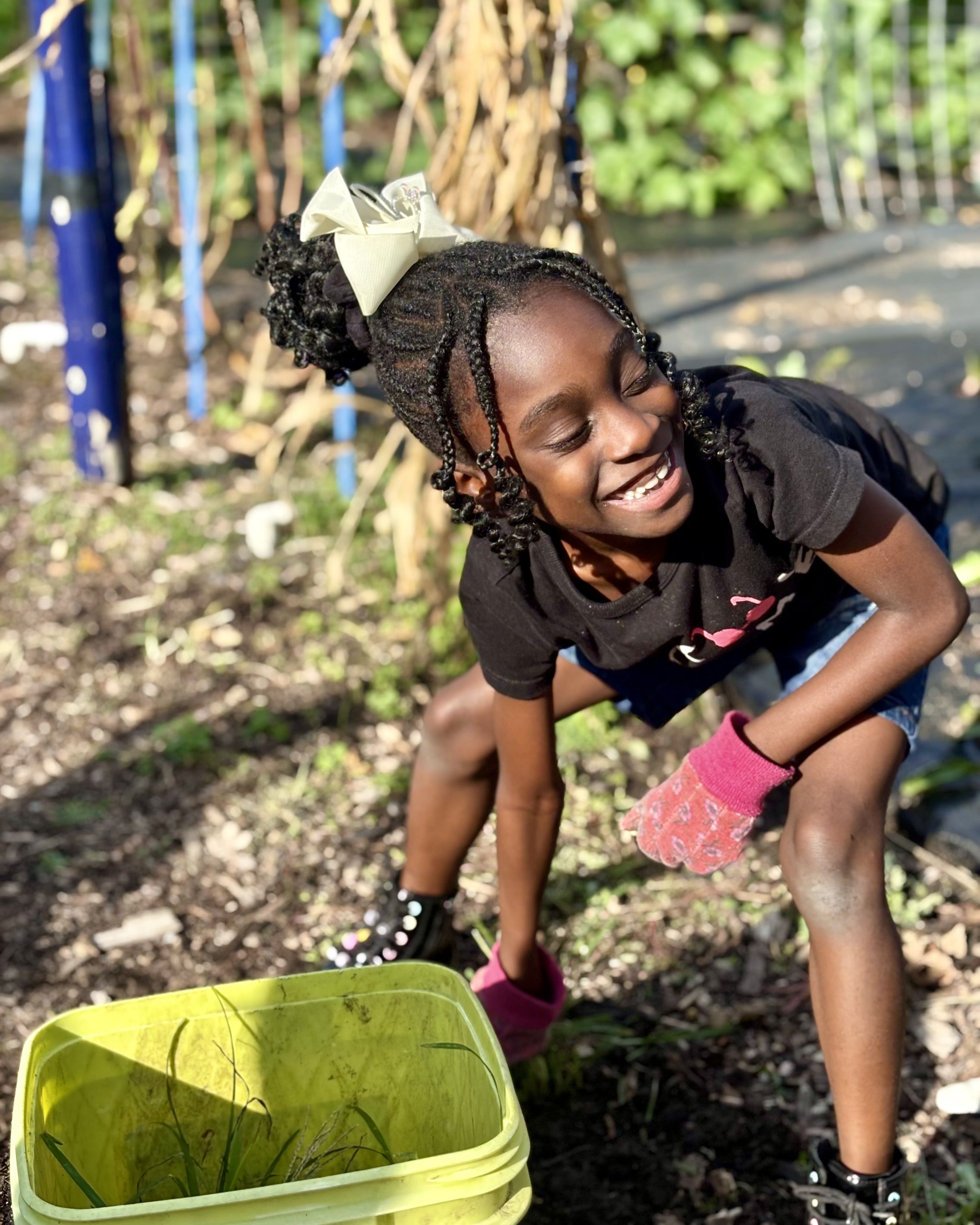
Highland Youth Garden is one of several amazing community gardens in Central Ohio. We are unique in our focus on not only food production but also involving children and teens at every step in the growing process. We have a very large school day field trip partnership, which brings hundreds of children to the garden every other week as part of their regular curriculum. We have an after-school program, summer camp, teen employment program, and a three-times-weekly free garden market. We are exclusive to our neighborhood: only children who live or go to school on the Hilltop or in Franklinton can register and attend our programs. This is an important focus in a neighborhood that is under-resourced. At the same time, we are an entirely open site which allows anybody at any time to enjoy our beautiful oasis.
2. Reflecting on recent achievements, what has been your biggest success as an organization in the past year?
In 2025, we tripled our produce production from our past record of 4,000 pounds. We will have grown and distributed over 12,000 pounds of sustainably grown fresh produce by the end of this growing season!
3. Turning to challenges, what is the most pressing issue your community or clients are currently facing in the coming year?
Access to healthy, fresh produce is a huge problem in our community. The USDA designation of a food desert requires a minimum of one mile distance from a full-service grocery store. Our community is two miles away. This means that in order to get fresh produce, someone with small children and no access to private transportation would need to transport not only their children but also bags of groceries on the bus on a regular basis. This is a serious barrier. And then, the issue of affordability also comes into play. Produce is more expensive than unhealthy processed food. With the cuts to SNAP and dramatically increasing grocery prices, this becomes a crisis situation. Our organization educates about the term “food apartheid” rather than “food desert” to make clear that this crisis is not a naturally occurring situation, but a decision made by society.
4. Community involvement is key. How can people who are inspired by your work get involved with your organization?
We are fortunate as an organization to easily offer a positive and inspiring way to volunteer. Gardening requires work literally every day, and while skilled staff oversight is essential, entry-level work is plentiful. We offer a way for individuals to sign up to volunteer when they like, and also provide a great experience for corporate or community groups
5. Collaboration is often essential in creating impact. Who are some of your favorite partners or collaborators in the community, and how do you work together?
Our most important partners are our three core collaborating schools: Highland Elementary, the Educational Academy for Boys and Girls, and the Hilltop Early Learning Center. Their teachers work with us to plan garden education curriculum for the students, help us reach out to families to access our resources, and involve us in their schoolwide events and programs. We are a tight neighborhood collective and often advocate for our community’s well-being as a single voice.
6. Becoming part of this network brings you to a new community and potential collaborations. Why did you decide to join Community Shares of Mid Ohio?
We would like to cultivate broader awareness of the importance of localizing our food system, building resilience in our communities, and building meaningful neighborhood outreach efforts. We think we do this well and would like to share that message on a wider scale in Central Ohio. We think this network will bring more awareness to the work that we are championing.
7. The heart of Community Shares’ work is to create a more just, caring and healthy Community for all. How does your organization contribute to this vision?
A wonderful thing about gardening is that you need to be outside A LOT! This means there are many opportunities to interact with neighbors and welcome them into our space. We try to live the idea of “radical welcome” by inviting everyone to participate in learning to garden in a casual, no-pressure environment. Every person on the planet descends from farmers and people who have a caring relationship with the land, so it’s a unifying experience that builds health and well-being.
8. Let’s end with something surprising. What’s an interesting fact or statistic about your organization that most people might not know?
Highland Youth Garden was founded by an incredible group of volunteers who not only developed an amazing garden, a beautiful relationship with our neighborhood, and impactful programs, but they also designed and built what we think was the first high tunnel growing facility in the City of Columbus that is properly licensed for children to be inside. At Highland Youth Garden, it’s all about the kids, so they were committed to doing things properly!
Through education, inclusion, and an unwavering commitment to neighborhood-centered work, Highland Youth Garden demonstrates how growing food can also grow opportunity, belonging, and hope. By centering children, addressing food access head-on, and welcoming the community with open gates and open hands, they continue to cultivate a healthier, more connected future, one garden bed at a time.
Explore Highland Youth Garden's profile and get to know the rest of our member nonprofits.